
2026 Best Medical Device Testing Labs for Global Buyers?
Choosing among the 2026 best Medical Device Testing labs requires more than comparing prices or polished websites. Global buyers need evidence of technical competence, traceability, and practical experience with their device category.
The World Health Organization reports more than two million medical device types worldwide, grouped into over 7,000 generic categories. That scale creates testing complexity. A wearable sensor may need biocompatibility, electrical safety, cybersecurity, and wireless performance reviews. An implant demands deeper biological and mechanical evidence. The details matter.
Medical technology keeps expanding. MedTech Europe estimates that Europe’s medical technology market exceeds €160 billion annually, with hundreds of thousands of products in circulation. Market figures differ by source. That is worth remembering.
Dr. Jeffrey Shuren, former director of the FDA’s Center for Devices and Radiological Health, stressed a practical principle: “The benefits of a device must outweigh its risks.” This principle should guide every laboratory comparison.
A reliable lab should show current ISO/IEC 17025 accreditation, competent personnel, validated methods, calibrated equipment, and clear report controls. It should also explain sample handling, retesting rules, uncertainty, and communication during failures. A glossy certificate is not enough.
Look closely.
This guide reviews leading laboratories for global buyers in 2026, using public accreditation records, regulatory capabilities, technical coverage, regional access, and client-service evidence. Rankings remain imperfect because laboratory performance can vary by project, location, and device risk. Buyers should verify scope directly before signing a contract, especially for novel or software-connected devices.
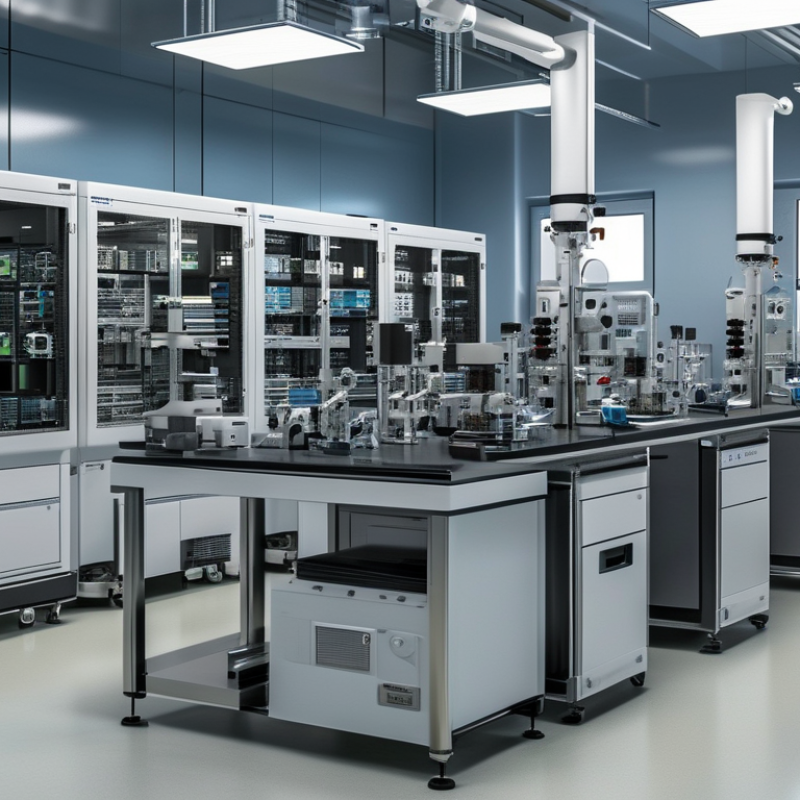
What Medical Device Testing Labs Do for Global Buyers
Medical device testing labs give global buyers more than a pass-or-fail report. They provide evidence that a device performs safely across different users, environments, and supply chains. The WHO Global Atlas of Medical Devices identifies more than two million device types worldwide. That variety makes competent testing essential, especially for products combining software, electronics, materials, and clinical functions.
A capable laboratory translates regulatory requirements into practical test plans. It may assess biocompatibility, electrical safety, electromagnetic compatibility, sterility, packaging, usability, and cybersecurity. It also checks whether test methods match the device’s intended use. ISO’s 2022 Survey recorded more than 34,000 ISO 13485 certificates globally, showing how widely quality systems support medical-device production. Certification alone, however, does not prove technical competence. Buyers should review accreditation scope, equipment calibration, assessor qualifications, sample handling, and report traceability.
Details matter. A lab should explain acceptance criteria before testing begins. It should preserve raw data, photographs, deviations, and environmental conditions. These records can help buyers respond to regulators, distributors, and hospital procurement teams. International buyers also benefit from laboratories familiar with regional submission formats and language requirements. Still, no laboratory removes every risk. Test samples may not represent long-term clinical use, and hurried protocols can hide weak assumptions. That uncomfortable gap deserves attention. Experienced buyers compare independent evidence, question unclear results, and request corrective testing when findings seem too neat.
2026 Best Medical Device Testing Labs for Global Buyers? - What Medical Device Testing Labs Do for Global Buyers
| Testing Area | Common Reference Standards or Regulatory Frameworks | Typical Test Evidence Delivered | Typical Planning Time* | Why It Matters to Global Buyers | Key Capability to Verify |
|---|---|---|---|---|---|
| Biological Safety | ISO 10993 series; risk-based biological evaluation | Biocompatibility test reports, biological evaluation support, material and contact-duration assessment | 4–16 weeks, depending on test selection and sample preparation | Supports safety assessment for devices that contact skin, tissue, blood, or other body fluids | Experience with the device’s contact type, duration, materials, and extractables strategy |
| Electrical Safety | IEC 60601-1 for applicable medical electrical equipment; relevant collateral and particular standards | Electrical safety test report, abnormal-operation results, construction review, and risk-related observations | 4–10 weeks, subject to device complexity and test readiness | Helps identify electric shock, mechanical, temperature, insulation, and essential-performance risks | Suitable test equipment, safety-engineering expertise, and ability to review applicable device standards |
| Electromagnetic Compatibility | IEC 60601-1-2 for applicable medical electrical equipment; regional EMC requirements | Emissions and immunity results, test configuration, deviations, and corrective-action observations | 2–6 weeks after the device is test-ready | Assesses whether the device can operate safely without causing or suffering unacceptable electromagnetic interference | Validated chambers, calibrated instrumentation, and experience with operating modes and accessories |
| Software and Firmware | IEC 62304; software risk controls linked to ISO 14971; applicable cybersecurity requirements | Software lifecycle assessment, verification results, traceability review, and vulnerability-related documentation | 4–12 weeks, depending on software safety classification and documentation maturity | Supports evidence for connected, programmable, and software-controlled medical devices | Ability to assess requirements, architecture, verification, change control, and cybersecurity documentation |
| Usability Engineering | IEC 62366-1; human-factors expectations applicable to the target market | Use-related risk analysis, formative study results, summative evaluation records, and usability findings | 3–10 weeks, depending on protocol, participant profile, and number of use scenarios | Reduces the risk of use errors that could cause harm during normal or reasonably foreseeable use | Qualified human-factors specialists and access to representative users and environments |
| Packaging and Distribution | ISO 11607; ASTM D4169 or equivalent distribution simulation methods | Packaging integrity, seal-strength, visual inspection, and simulated-distribution test results | 2–8 weeks, depending on packaging design and distribution profile | Helps demonstrate that sterile or protected products remain fit for use through transport and handling | Capability to test the complete packaging system, not only individual materials |
| Sterilization Validation | ISO 11135 for ethylene oxide; ISO 11137 for radiation; ISO 17665 for moist heat, where applicable | Process-validation protocol, microbiological results, dose or cycle records, and residuals assessment where applicable | 6–20 weeks, depending on sterilization method and validation design | Provides evidence that the selected process achieves the required sterility assurance without damaging the device | Validated processes, environmental controls, microbiology expertise, and residuals testing capability |
| Shelf-Life and Accelerated Aging | ASTM F1980 for accelerated aging of sterile barrier systems; product-specific stability methods | Aging plan, post-aging functional testing, package-integrity results, and proposed shelf-life evidence | 4–24 weeks for accelerated studies; real-time studies continue for the planned duration | Supports expiry-date decisions and helps verify performance after storage and transportation | Correct aging assumptions, environmental controls, and clearly defined acceptance criteria |
| Mechanical and Environmental Testing | Product-specific ISO, IEC, ASTM, or regional requirements; transport and environmental test methods | Drop, vibration, impact, ingress protection, temperature, humidity, and durability test reports | 2–8 weeks, depending on test sequence and sample quantity | Shows whether the device can withstand expected use, storage, transport, and environmental conditions | Programmable environmental chambers, calibrated mechanical equipment, and product-specific test fixtures |
| Chemical Characterization and Extractables | ISO 10993-18; ISO 10993-17; applicable pharmacopeial or analytical methods | Chemical characterization, extractables profile, toxicological assessment support, and analytical data | 6–16 weeks, depending on material complexity and analytical scope | Helps identify substances that may contribute to biological or chemical risk | Sensitive analytical instrumentation, validated methods, and toxicological interpretation support |
Related Posts
-

How to Ensure Effective Medical Device Testing and Compliance in 2023
-
Challenges Faced When Selecting Best Used Medical Equipment for Your Facility
-

5 Must Have At Home Medical Supplies for Global Buyers
-

How to Choose the Best Home Health Supplies for Your Needs?
-

How to Choose the Best Healthcare Equipment for Your Needs?
-
7 Essential Tips for Choosing the Right At Home Medical Supplies for Your Needs